An everyday field guide
Bathing a dog at home without the stress
Most dogs don't need the bath schedule their owners fear — and the dogs who hate baths usually hate the chaos around them, not the water. This guide covers how often is actually often enough, a calm order of operations, and the few things that belong to a groomer or a vet instead of a bathtub.
Medicated shampoos, skin irritation, parasites and anything beyond ordinary dirt are vet questions — not bath questions.
Published October 1, 2026 · Last updated October 1, 2026
How often is 'often enough'?
There's no universal bath schedule. The AKC's bath-frequency guide (opens in a new tab) puts the answer on the coat and the life: breed, coat length, lifestyle, and how much upkeep happens between baths. Its examples run the full spread — hairless breeds often need weekly baths; long coats might want weekly to every four to six weeks if they're maintained between baths; thick double coats generally need fewer baths and more brushing.
In between, brushing and a damp cloth do most of the work. The AKC's grooming guide (opens in a new tab) advises bathing regularly but not too often — overbathing strips the natural oils that keep skin and coat healthy. A bath is due when the coat is greasy, smells, or carries dirt that brushing won't lift — or when the dog has rolled in something that settles the question for you.
Figure 1 · Frequency follows the coat
Rough rhythm by coat type
Set up before the dog knows
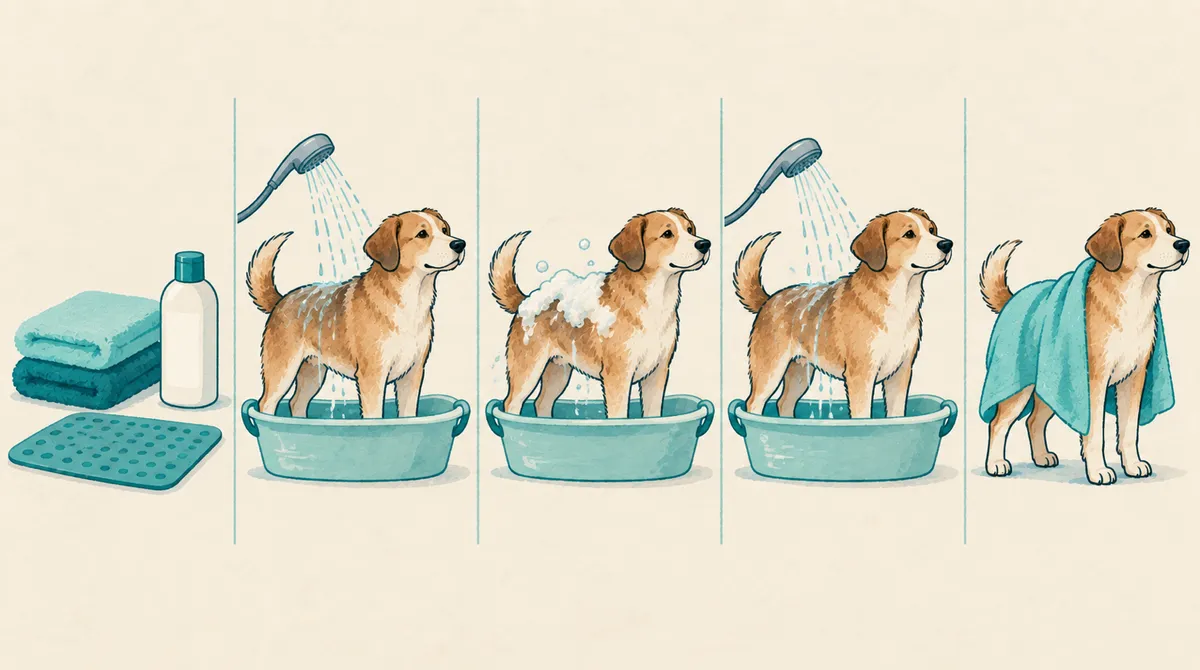
The calm bath starts dry. Get everything within arm's reach before the dog sees the tub: dog shampoo, towels, the brush, treats. A non-slip mat in the tub gives the dog footing, and footing is half the anxiety. Lukewarm water — not hot — and shallow at first. PDSA's grooming guidance (opens in a new tab) is specific about products: use a shampoo made for dogs, because human shampoo can irritate dog skin.
Brush before the water runs. Wet tangles tighten into mats, and a five-minute brush-out first means the bath is lifting loose hair instead of cementing it — during a seasonal shed, the shedding guide's rhythm does that job all week.
Figure 2 · Within arm's reach
Six things ready before the water runs
A calm order of operations
Work back to front, head last — or not at all: the face gets a damp cloth, not a shower. Keep your voice low and your movements slow, and let the dog stand rather than holding them in place. The AKC's grooming guidance is explicit about the two places to keep water and shampoo away from: the eyes and inside the ears.
Figure 3 · The bath, in order
Five steps, slowly done
- PrepareMat down, supplies reached, dog settled before any water runs.
- Wet the coatLukewarm water from the neck back — leave the head dry.
- Lather, eyes and ears sparedDog shampoo worked down to the skin, clear of eyes and ear openings.
- Rinse longer than feels necessaryLeftover shampoo irritates skin — rinse until the water runs clear.
- Towel, then rewardBlot the coat dry, then make the ending worth remembering.
If the dog panics, stop and reset rather than pushing through — a bath that ends early teaches less fear than one that proves the fear. PDSA's grooming guidance makes the same point across all grooming: go slowly, keep it positive, and stop if the dog is stressed.
Drying and the post-bath shake
The shake is coming — step back and let it happen. Then blot rather than rub: rubbing a wet long coat tangles what the bath just loosened. If you reach for a dryer, keep it on the coolest setting, keep it moving, and only use it on a dog who tolerates the noise — many don't, and towels are enough.
Keep the dog somewhere warm until the coat is dry to the skin. Double coats hold damp against the skin longer than they look like they do. And expect the post-bath zoomies — a burst of running and rolling is a normal way to shake off the whole affair, so choose the room accordingly.
Face, ears and paws: what to leave alone
The head is a wipe, not a wash. Clean around the face with a damp cloth — no shampoo near the eyes — and leave the inside of the ears alone: no water, no swabs, just a damp cloth on the outer ear if it needs it. Water inside the ear canal is one of the bath's few real risks. Paws get a rinse between the toes if they've been in something, then a thorough dry.
Figure 4 · Not bath questions
Leave these out of the tub
- Water or shampoo near the eyes or inside the ears
- Medicated or flea shampoo — only on the vet's advice, for a stated reason
- Bathing over irritated, broken or sore-looking skin
- Smell or grime that returns within days, or skin that looks wrong between baths
Skin irritation, parasites, and smells that come straight back are vet questions — a bath can cover them, not fix them.
When a groomer or vet bath makes more sense
Home bathing is for an ordinary dirty dog with an ordinary coat. Hand it over when the situation stops being ordinary: a coat that's matted to the skin (mats may need clipping, not washing), a dog who is frightened past settling, or a dog too big to wash safely at home all suit a groomer with the right table and restraint-free handling. Medicated shampoos and skin problems belong with the vet — PDSA's grooming guidance sends skin conditions to the vet before routine grooming, and the AKC's grooming guide notes the same for skin that looks off.
Knowing what coat you're working with helps the decision — a photo observation can describe the coat type visible in a picture — readings are AI-generated and provisional — and our coat guide maps coat types to upkeep. A bath can't answer a skin question; it can only postpone it.
A useful handoff: Set up first, work back to front, rinse twice as long as feels right, and keep the ending good — the next bath starts from whatever this one taught.
Sources
- How often should you wash your dog? (opens in a new tab) — American Kennel Club: bath frequency by breed, coat length and lifestyle, from weekly hairless-coat baths to low-frequency double coats.
- Grooming pets (opens in a new tab) — PDSA: dog-specific shampoo, calm positive handling, and sending skin conditions to the vet.
- How to groom a dog (opens in a new tab) — American Kennel Club: bathe regularly but not too often, mild dog shampoo, and keeping water away from eyes and ears.
Sources last checked 2026-10-01.
Wondering which coat you're washing? Dog Says Hi's photo observation can describe the coat type a picture shows — the photo is sent only after you explicitly submit it, and the AI-generated reading is provisional and can be wrong or incomplete. For skin, parasite, or ear concerns, contact a veterinarian.
Related reading
Bath day sits between coat knowledge and the shedding calendar.
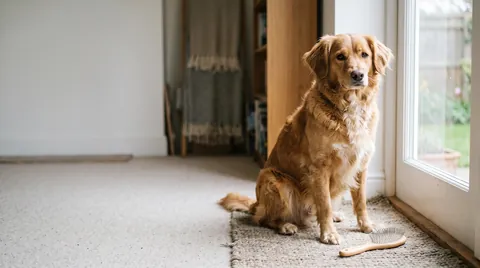 Understand coat texture and routine groomingThe coat you can feel sets the bath schedule too.
 Shedding seasons: what's normalA brushing rhythm that keeps bath day small.
 Keep dogs comfortable through changing weatherMuddy seasons make bath day more frequent.
Spotted an error? Tell us.