An everyday field guide
Shedding seasons: what's normal and a simple brushing rhythm
One week the house is clean; the next, there's enough loose fur to knit a second dog. Seasonal shedding is ordinary coat turnover — and a short, regular brushing rhythm keeps most of it off the floor. Here's what's normal, what helps, and what isn't a brushing problem at all.
Even, seasonal shedding is housekeeping. Bald patches, inflamed skin, or a sudden change in hair loss are vet questions.
Published October 1, 2026 · Last updated October 1, 2026
Why dogs shed: the coat's growth cycle
Hairs grow, rest, and release — shedding is how a coat renews itself. How much lands on the sofa depends on the coat, not on a verdict about breed: the AKC's shedding guidance (opens in a new tab) notes that shedding varies widely by breed and coat type, from barely-there hair to a steady snowfall. If you're not sure what you're looking at, our coat guide helps you read length, texture and whether there's an undercoat underneath.
Nothing stops shedding — not a supplement, a shampoo, or a clip. What brushing changes is where the loose hair ends up: in the brush, instead of on every soft surface.
What 'blowing coat' looks like
Many double-coated dogs shed their soft undercoat heavily twice a year — releasing the dense winter layer in spring, then dropping the lighter summer coat in autumn to make room for the next. The AKC's shedding guide names spring and autumn as the common heavy periods; dogs who live mostly indoors under artificial light may shed more evenly all year instead. Either pattern can be perfectly normal.
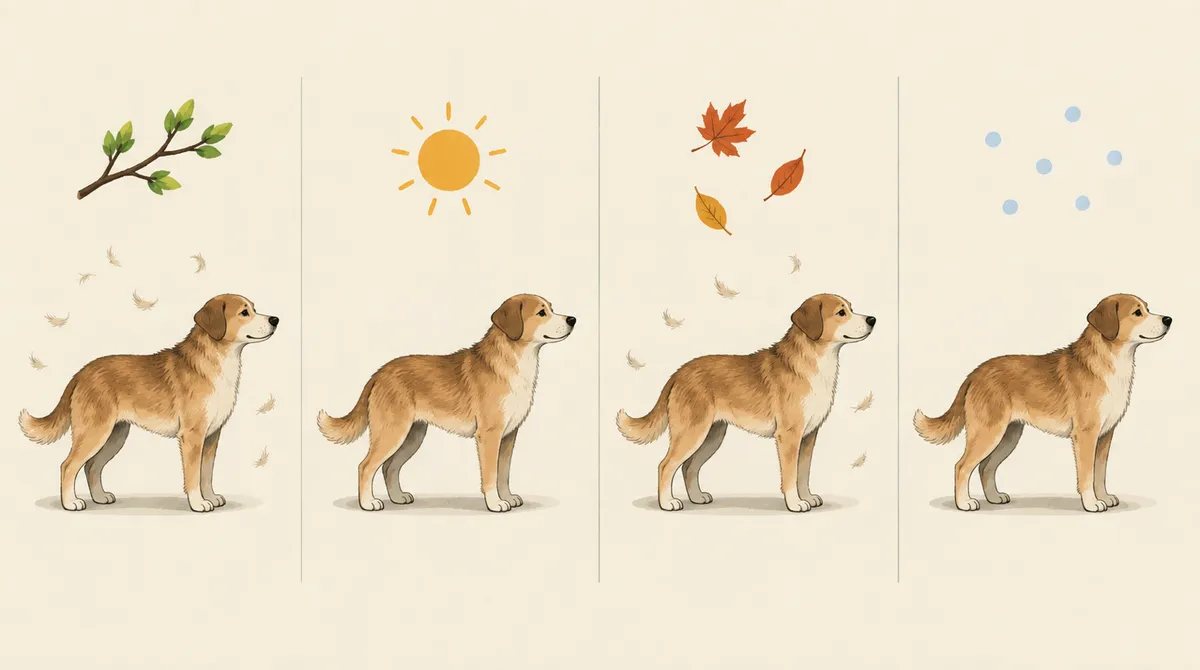
Figure 1 · The shedding year
When the fur usually flies
Spring
The dense winter undercoat releases in handfuls — the year's biggest shed for most double-coated dogs.
Autumn
The lighter summer coat drops away to make room for the winter layer — a second, usually smaller surge.
During a coat blow the fur often comes out in soft clumps and tufts, and a warm bath followed by a thorough brush-out can lift a week's worth at once. The weather matters too — a hot spell can start the spring shed early, and our weather guide covers keeping a thick-coated dog comfortable while the transition happens.
A simple weekly rhythm during shedding season
Frequency follows the coat. PDSA's grooming guidance (opens in a new tab) suggests roughly weekly brushing for short coats, a few times a week for medium coats, and daily attention for long coats — and during a seasonal shed, whichever category you're in moves up a notch. Little and often beats a weekly wrestling match; keep sessions short and stop before the dog objects, so grooming stays something they let you do.
Figure 2 · A rhythm that scales
Match brushing to the coat you have
- Short coatsWeekly is often enough — a rubber curry or bristle brush lifts the loose hairs.
- Medium and wiry coatsA few sessions a week keeps shed hair moving and tangles from setting.
- Long and double coatsDaily brushing during coat-blow — and step outside, because the loose hair travels.
A damp hand run along the coat after brushing lifts the finest loose hairs, and brushing outdoors — or over a hard floor — keeps the crop out of the carpet.
Tools that help (and what to skip)
Match the tool to the layer you're clearing. The AKC's shedding overview (opens in a new tab) names the usual suspects: a slicker or bristle brush for the topcoat, an undercoat rake or de-shedding tool for the soft layer beneath, and a comb for feathering and friction spots. De-shedding tools work, but use them as directed — overused, they can cut or thin healthy coat rather than just lift the loose hair.
What to skip: blades and scissors near the skin as a DIY fix, marathon sessions the dog dreads, and any tool a groomer hasn't shown you how to use on this coat. If the coat is matted or the dog won't tolerate brushing, a professional groomer is the right call — the coat guide covers when professional help beats home effort.
Why shaving a double coat usually backfires
When the house fills with fur, clippers look like a solution. They usually aren't. A double coat is two working layers — a protective topcoat over a soft insulating undercoat — and the AKC's double-coat guidance (opens in a new tab) explains that the same undercoat that insulates in winter helps regulate temperature in summer by trapping moving air. Shave it off and the shedding continues anyway — the coat keeps cycling — while the exposed skin loses its sun protection and the regrowth can come back patchy or woollier than before.
Cooling is the common reason owners reach for the clippers, but the brush does that work better: removing dead undercoat lets the coat do its job. If a coat is badly matted or a dog genuinely needs clipping, that's a groomer's call to make in person — our weather guide covers keeping dogs comfortable through hot spells without touching the coat.
When shedding is not normal: see the vet
Seasonal, even shedding — however dramatic — is housekeeping. Hair loss that isn't even is a different question. The AKC's shedding guidance flags the signs that belong with a vet rather than a brush.
Figure 3 · Vet questions, not brushing questions
Book the vet when shedding looks like
- Bald patches, or hair loss that's uneven rather than all-over
- Red, inflamed, sore-looking or broken skin under the coat
- A sudden increase in shedding outside the usual seasons
- Hair loss arriving alongside scratching, lethargy, or appetite change
Even seasonal shedding is a chore; patchy or sudden hair loss is a vet question.
A useful handoff: In season, brush little and often and let the coat do its weatherproofing work. Off-season changes, bald patches, or sore skin are the vet's territory, not the brush's.
Sources
- Managing dog shedding (opens in a new tab) — American Kennel Club: why shedding varies, the spring and autumn peaks, indoor-year-round shedding, tools, and when hair loss isn't normal.
- Double-coated dog breeds (opens in a new tab) — American Kennel Club: the two-layer coat, what the undercoat does in both seasons, and why shaving interferes with it.
- Grooming pets (opens in a new tab) — PDSA: brushing frequency by coat type, keeping sessions calm, and when professional groomers or vets should take over.
Sources last checked 2026-10-01.
Not sure which coat you're brushing? Dog Says Hi's photo observation can describe the coat type a picture shows — the photo is sent only after you explicitly submit it, and the AI-generated reading is provisional and can be wrong or incomplete. For skin or hair-loss concerns, contact a veterinarian.
Related reading
Shedding sits between coat knowledge, the seasons, and bath time.
 Understand coat texture and routine groomingRead the coat you can feel before picking a tool.
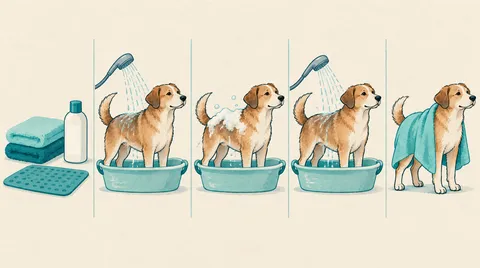 Bathing a dog at home without the stressA warm bath and brush-out lifts a week's loose coat.
 Keep dogs comfortable through changing weatherKeeping a thick coat comfortable while the season turns.
Spotted an error? Tell us.