An everyday field guide
Understand coat texture and routine grooming
The coat you can see is a starting point. The coat you can feel, and the dog's response to handling, tell you more about a useful grooming routine. Breed appearance alone cannot set an exact brushing schedule or tell you whether a coat should be clipped.
A photograph can suggest a coat's appearance; it cannot reveal an undercoat or set a schedule. Sources are linked beside each claim.
Start with what is observable
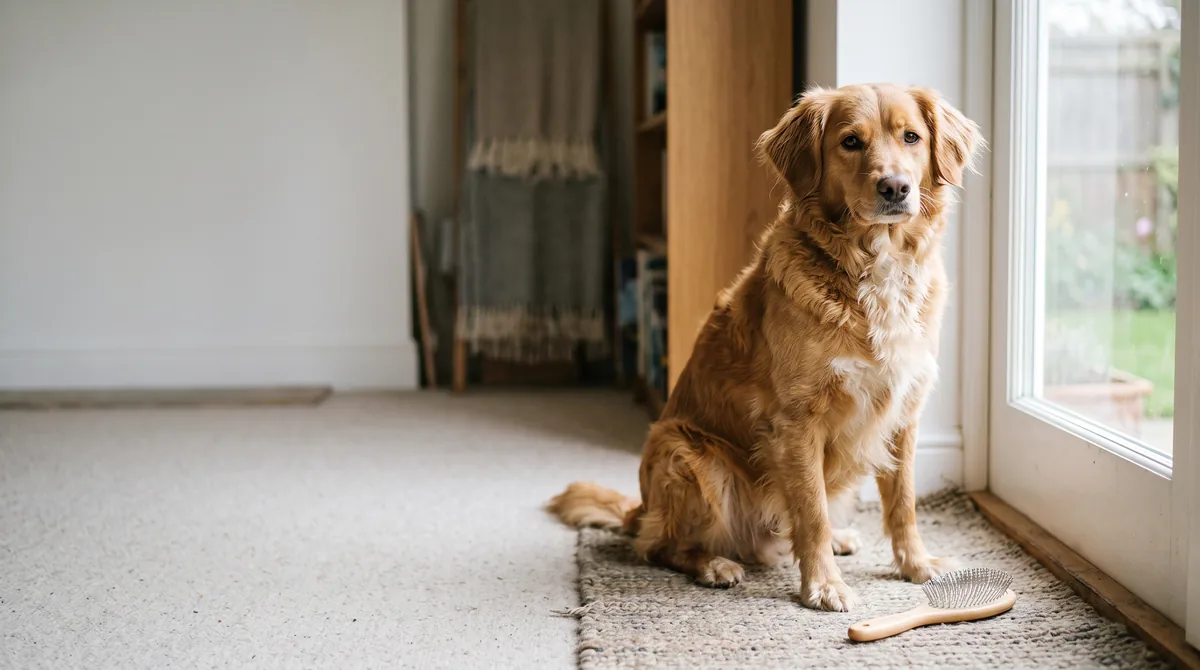
Notice whether the outer hair looks short, long, straight, wavy, or tightly curled. Then, if your dog is comfortable being touched, check how the hair feels and whether loose hair or tangles are present. Some dogs have a denser undercoat beneath the topcoat, which a photograph may not reveal. Blue Cross's grooming guide explains the undercoat and tools for loose hair. If the coat is hard to assess or grooming is uncomfortable, a reputable groomer or veterinarian can help you choose tools.
Figure 1 · Observation worksheet
Four observations to note before grooming
Match the routine to the individual dog
PDSA's grooming advice describes different brushing needs for short, medium, long, and curly coats. Curly hair can knot, particularly when wet; longer coats may need more attention to tangles. These categories are prompts for observation, not universal prescriptions. Recheck the coat during the routine: a brush that glides easily on one area may catch elsewhere. Ask a professional for an individual schedule if you are unsure.
Keep sessions calm and gradual. Let the dog sniff the tool, begin with a short easy area, and stop before the dog becomes distressed. Blue Cross recommends building familiarity and using suitable tools. Comfort is part of the routine; brushing is not a test of obedience.
Figure 2 · Coat cross-section
The coat may have a hidden layer
A simplified cross-section of a double coat. Not every dog has this coat.
- Topcoat — the hair you can see
- Possible undercoat — may not show in a photo
- Skin
Be careful with haircuts and mats
A summer haircut is not automatically cooler. Coat structure and individual needs matter, and some coats help protect the skin from sun. PDSA's summer guidance and AVMA's warm-weather safety advice support asking a veterinarian or reputable groomer before making a major trim decision. Do not shave or strip a coat because a photo suggests a breed. If there are tight mats, sore skin, or discomfort, seek professional help rather than pulling or cutting close to the skin at home.
A useful handoff: Write down the coat features you actually observe, the grooming tool used, and the dog's comfort. That small record helps a groomer or veterinarian give advice tailored to this dog.
For a description of visible coat traits, try Dog Says Hi's photo observation. It offers routine care ideas and does not assess skin or diagnose disease.
Related reading
A clearer photo makes coat traits easier to describe; the seasons shape the routine too.
 Take a dog photo that shows visible traitsComfortable sessions, useful light, and honest limits.
 Keep dogs comfortable through changing weatherWarm-weather planning and winter paw care.