An everyday glossary
Dog coat colours and markings: a plain-English glossary
Breed descriptions and photo readings are full of coat vocabulary — brindle, merle, piebald, ticking, points. This glossary explains the terms in plain language, so a word becomes an observation you can check against your own dog rather than jargon you have to trust.
These terms describe appearance only. Colour says nothing reliable about health, temperament, or breed on its own.
Published September 29, 2026 · Last updated September 29, 2026
How to use this glossary
Find the word, read the plain meaning, then check it against the dog in front of you — a definition only earns its place if it matches something you can see. Most of these terms come from breed-club vocabulary, so the AKC's official glossary (opens in a new tab) is the reference this page follows.
One spelling note: this page uses the British spelling colour, while American sources — including the AKC — write color. The terms mean the same thing either way. And a caution that applies to every definition here: a colour or pattern word describes an appearance. It does not tell you a breed, a health profile, or a temperament.
Base colours you will see (black, liver, red, fawn, cream, blue)
Base colours are the coat's main pigment before pattern does anything to it. Names vary slightly between registries, but the everyday meanings are stable.
- black
- A coat that is dark all over. Strong sunlight can bleach it toward brown at the tips.
- liver / chocolate
- Brown pigment. “Liver” is the older field term; “chocolate” names the same brown family, familiar from chocolate Labradors.
- red
- A rich orange-copper shade, deeper than fawn — think Irish Setter colouring.
- fawn
- Light tan through deeper beige. The shade sits between cream and red.
- cream
- A pale, warm, near-white coat — lighter than fawn, warmer than white.
- blue
- A slate-grey shade produced when black pigment is diluted. You will meet it inside “blue merle”.
Patterns: brindle, merle, piebald, saddle, sable, ticking, roan
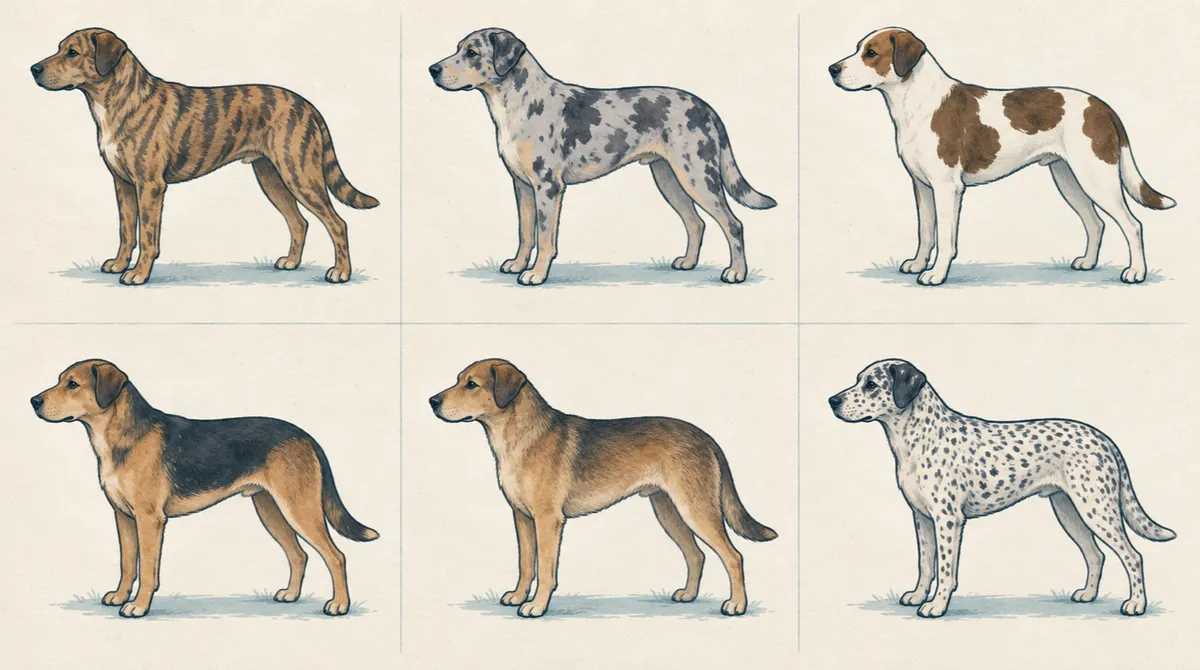
Patterns sit on top of a base colour and rearrange it. These are the seven readers meet most often.
- brindle
- Dark striping over a lighter ground coat — often described as tiger stripes. The base can be fawn, red, or brown.
- merle
- Marbled patches where some pigment is diluted and some is full, sometimes paired with pale or part-pale eyes. It is a pattern, not a colour — and this guide offers it only as vocabulary. Decisions about breeding merle dogs carry known risks and belong with breeders and veterinarians, not with a glossary.
- piebald
- A mostly white coat carrying clearly defined patches of colour — colour islands on a white field.
- saddle
- A darker blanket of colour over the back and sides while the face, chest, and legs stay lighter — the classic “saddle” outline.
- sable
- Individual hairs that are light at the base and dark at the tip, producing a shaded, tipped look rather than stripes or patches.
- ticking
- Small speckles of colour scattered through white areas, as if the coat were flecked with a fine brush.
- roan
- A close, even mixture of white and coloured hairs that reads as a grizzled, muted tone from a distance.
Markings: mask, blaze, points, collar, socks
Markings are smaller features placed on top of the base colour and pattern — the details breed descriptions reach for when they say “tan points” or “a full white collar”.
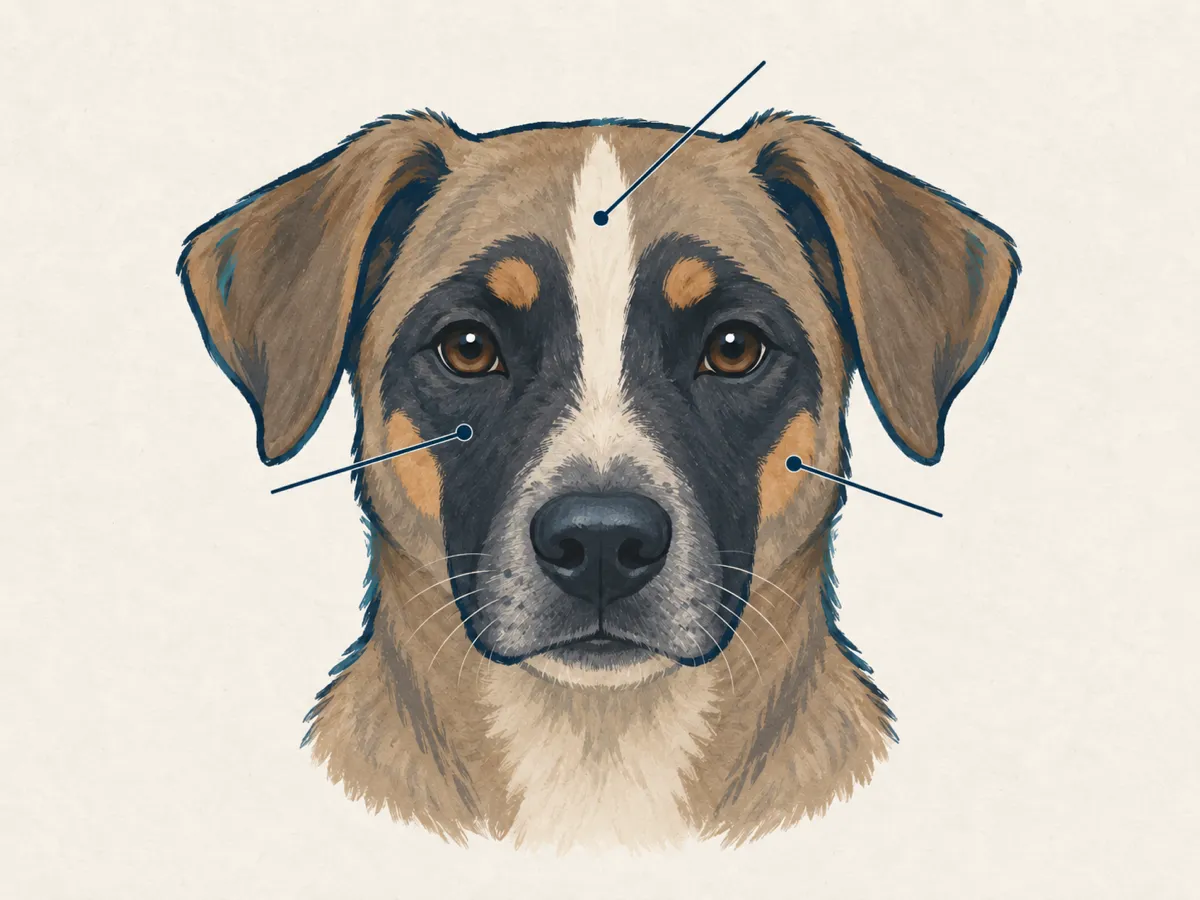
- mask
- Darker shading covering the muzzle and sometimes the eyes, like a bandit's mask.
- blaze
- A pale stripe running up the centre of the face between the eyes.
- points
- Contrasting — usually tan — markings at the cheeks, brows, chest, legs, and under the tail, as in “black and tan points”.
- collar
- A band of a different colour circling the neck; “full collar” wraps all the way around.
- socks / stockings
- White or pale feet and lower legs, as if the dog were wearing them.
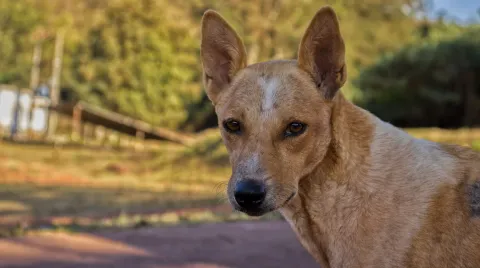
Figure 1 · Face markings
Where mask, blaze, and points sit
Single vs double coats in one line
A single coat is one layer of hair; a double coat adds a dense, insulating undercoat beneath the visible topcoat — the structure behind heavy seasonal shedding and behind the common advice not to shave a double-coated dog unless a vet or groomer recommends it. The AKC's double-coat explainer (opens in a new tab) covers the structure, and the coat types guide covers what each texture means for grooming.
Where colour words help — and where they mislead
Colour vocabulary earns its keep when you are describing a dog: to a vet, a groomer, a rescue, or a photo tool that reports visible traits. It misleads the moment it is asked to carry more. The same word can mean slightly different things across registries and breeds, photographs shift colour with light and grooming, and no colour or pattern indicates health, behaviour, or temperament on its own.
The practical order is describe first, name second: base colour, then pattern, then markings. Care follows texture and the individual dog, not the colour name — PDSA's grooming guidance (opens in a new tab) is organised by coat type for exactly that reason.
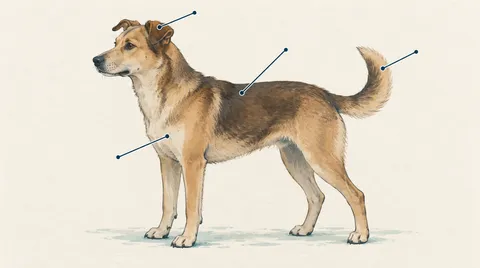
Figure 2 · Describing before naming
A simple order for describing a coat
A useful handoff: Base colour, pattern, markings, whole coat — four words of description are worth more than one confident guess at a breed.
Sources
- AKC glossary (opens in a new tab) — the breed-club vocabulary this page follows for colour and marking terms.
- AKC double-coated dog breeds (opens in a new tab) — topcoat and undercoat, and the grooming cautions around double coats.
- PDSA grooming guidance (opens in a new tab) — routine coat care organised by coat type, not colour name.
Sources last checked 2026-09-29.
Wondering which of these words apply to your dog? Try Dog Says Hi's photo observation and compare the visible-trait list with the terms above. For health concerns, contact a veterinarian.
Related reading
From the words on a coat to the texture underneath it — and what the features hint at.
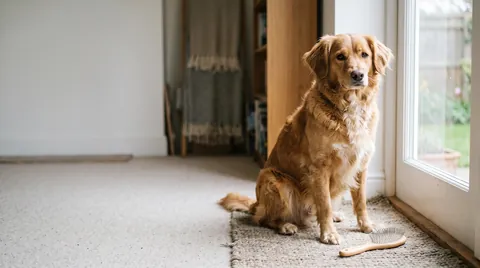 Understand coat texture and routine groomingLength, texture, loose hair, and comfort with brushing.
 What breed might my dog be? Reading photo cluesWhich visible features hint at ancestry — and where guessing ends.
 How to photograph a dog and read its coatThe original combined primer: one clear photo, the visible coat, and a gentle routine.
Spotted an error? Tell us.