An everyday field guide
Take a dog photo that shows visible traits
The most useful dog photo is one taken without making the dog endure the process. You want a clear view of appearance, but the dog's comfort decides whether the session continues. A photograph can show a coat, ears, markings, and silhouette. It cannot certify breed or tell you how a dog feels.
A photograph can show visible traits; it cannot establish ancestry, health, or temperament. Sources are linked beside each claim.
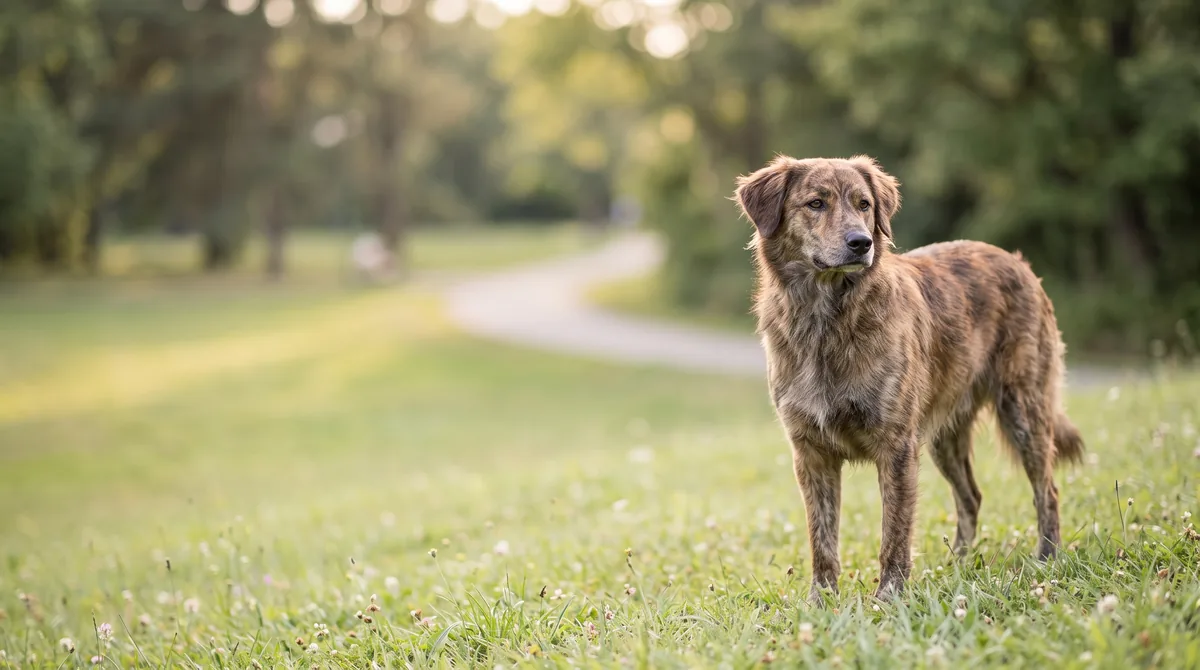
Let the dog set the pace
Pick a familiar place and wait for an ordinary, relaxed moment. Keep the session short. If your dog turns away, moves off, or no longer seems interested, stop and try another day. Animal-welfare photography guidance recommends patience, natural behavior, and avoiding forced poses. PDSA and Blue Cross offer practical examples. A treat or toy can help draw attention when your dog enjoys it; it should not become a reason to prolong an uncomfortable session.
Figure 1 · Session sequence
A short session that respects the dog
- Wait for a natural momentPick a familiar place and let the dog relax first.
- Take a few photosKeep the session short and let the dog stay natural.
- Stop when the dog disengagesIf the dog turns away or loses interest, try another day.
Make visible features easier to see
Use soft, even light and photograph at your dog's level. Give the dog enough room in the frame to show their full outline. If the dog is willing, a natural side view can make body shape and coat length easier to discuss, while a front or three-quarter view can show ears and markings. These are composition suggestions, not a validated checklist for identifying breed. PDSA's pet-photography guidance supports eye-level framing and good light.
Avoid reading detail into a dark, blurred, or heavily filtered part of an image. A shadow can hide the coat texture; long grass can hide the legs. You can simply say “I can't see that feature clearly.” If you want another picture, wait for a comfortable moment rather than repositioning the dog by force.
Describe first, guess later
Start with observations: “short tan coat,” “one ear folded in this picture,” or “white patch on the chest.” An ear's position in a single frame may be momentary; color can shift with light. Only after listing what is visible should you describe possible breed influences, and then as possibilities. A study of shelter dogs' visual breed labels and genetic tests found that appearance labels did not reliably represent mixed-breed heritage, especially when several breeds contributed. That research does not measure Dog Says Hi's image tool; it explains why a photo should never be presented as a pedigree test.
Figure 2 · What is actually visible
What one photo can — and cannot — show
Visible in this frame
- Coat length, texture, and markings
- Ear shape and position in this moment
- Body outline and posture in this view
Not knowable from a photo
- Ancestry or breed make-up
- Health, emotion, or temperament
- What happened before or after this frame
A useful handoff: Keep a clear original image, record anything you know outside the frame, and distinguish that context from what the image shows. A description based on a photo remains an observation, not a genetic, behavioral, or medical result.
Want an everyday description of visible traits? Try Dog Says Hi's photo observation. The photo is sent only after you explicitly submit it. For health concerns, contact a veterinarian.
Related reading
Keep going with the coat the photo shows, or learn how much a single moment can tell you.
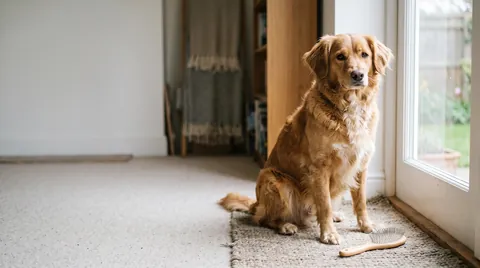 Understand coat texture and routine groomingLength, texture, loose hair, and comfort with brushing.
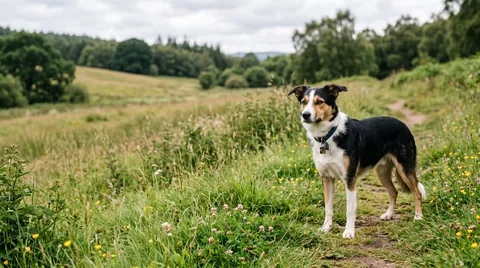 Read dog body language in contextWhy one frame — or one wag — is never the whole story.