An everyday field guide
Read dog body language in context
A tail, ear, or expression on its own is only a fragment. Watch the whole dog over time and notice what is happening nearby. The practical question is less “What emotion is this dog?” and more “Does this dog have room to move away, and should I slow down?”
A still image cannot establish an emotion, temperament, or behavioral safety. Sources are linked beside each claim.
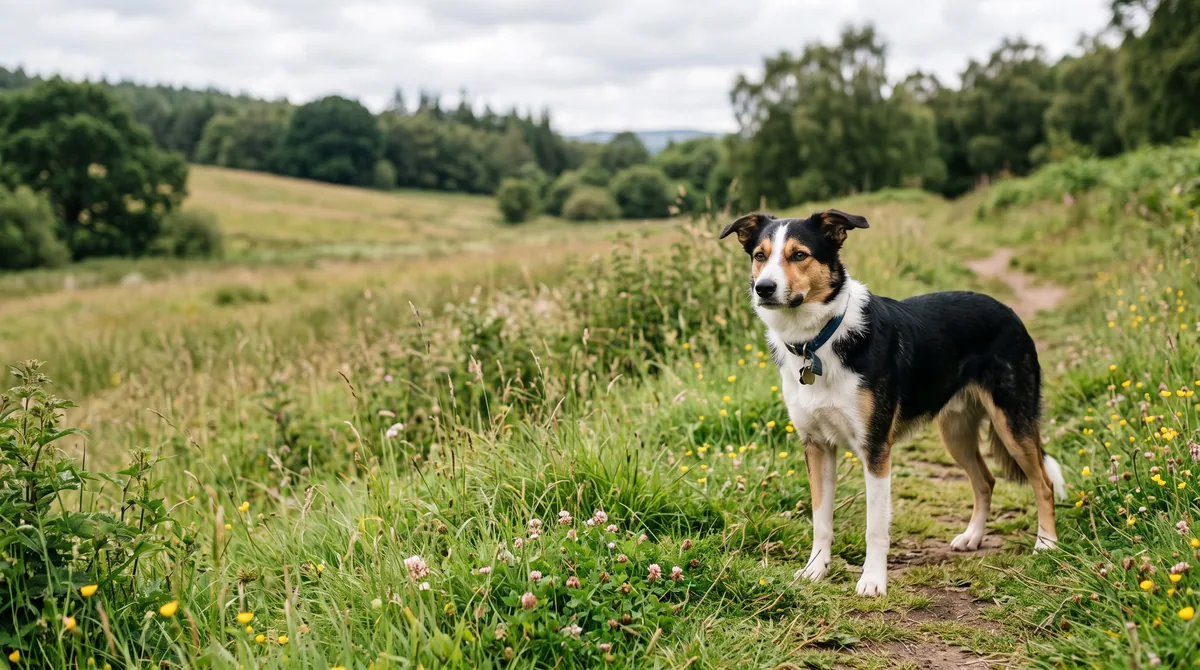
Look at the whole picture
PDSA's canine body-language guide recommends reading the face, posture, tail, and situation together. A loose body and soft eyes can accompany relaxation. A tense or very still posture, turning away, or a tucked tail can suggest discomfort. These are clues, not a diagnosis or a guarantee of what will happen next. A still photograph removes the before and after that make a clue easier to interpret.
Figure 1 · Whole-dog observation
Read the whole dog, not one cue
- PostureLoose and soft, or tense and still?
- FaceEyes, mouth, and tension.
- TailHeight and movement, in context.
- SurroundingsWhat just changed nearby?
Watch over time:what came beforethis momentwhat follows
A wag is one cue, not a verdict
A wagging tail does not by itself mean a dog is happy. Consider where the tail sits, how the rest of the dog moves, and what has just changed in the environment. PDSA explains the limits of isolated tail cues. A dog that pauses, stiffens, or turns away may need more distance even if the tail moves.
Lip licking, a yawn outside an obvious sleepy moment, avoidance, a fixed stare, or stillness may also be signs that the interaction is too much. They can have other explanations, so avoid treating one sign as proof. PDSA's stress guidance and communication guide show why watching for several cues and their context matters.
Respond by making space
If a dog pulls away, becomes still, or growls, pause the interaction and give the dog a way to leave. Do not punish a growl; it is useful communication. PDSA's communication guide recommends respecting these signals. If a behavior changes suddenly, or you are concerned, arrange a veterinary check because pain or illness can affect behavior. PDSA stress guidance.
Figure 2 · Giving space
When a dog needs room, respond with space
- Notice the changeTurning away, stillness, or a growl can mean the interaction is too much.
- Pause the interactionStop approaching or petting; let the moment settle.
- Give the dog room to leaveMake space and let the dog choose distance.
A useful handoff: Note the setting, what happened before a change, how the whole dog moved, and what helped create space. A single image cannot establish an emotion, temperament, future bite risk, or sociability. Dog Says Hi's photo tool describes visible traits and routine care; it does not interpret behavioral safety.
Continue with introducing dogs at their pace if the setting involves another dog.
Related reading
When the setting involves another dog, or a picture worth describing honestly.
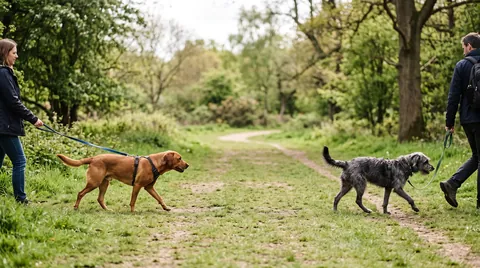 Introduce dogs at their paceNeutral space, separate handlers, and room to move away.
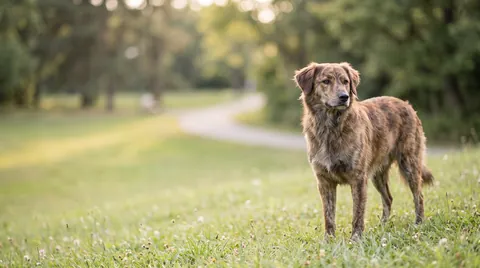 Take a dog photo that shows visible traitsComfortable sessions, useful light, and honest limits.