An everyday field guide
Meeting dogs politely: greetings, space and children
Most trouble between people and unfamiliar dogs starts the same way — a fast, well-meant approach the dog never agreed to. The polite version is slower and simpler: ask first, let the dog decide, keep children supervised, and know the moments when the answer is no.
Bites and injuries are medical questions — this guide covers the greeting, not treatment or reporting rules. Sources are linked beside each claim.
Published October 1, 2026 · Last updated October 1, 2026
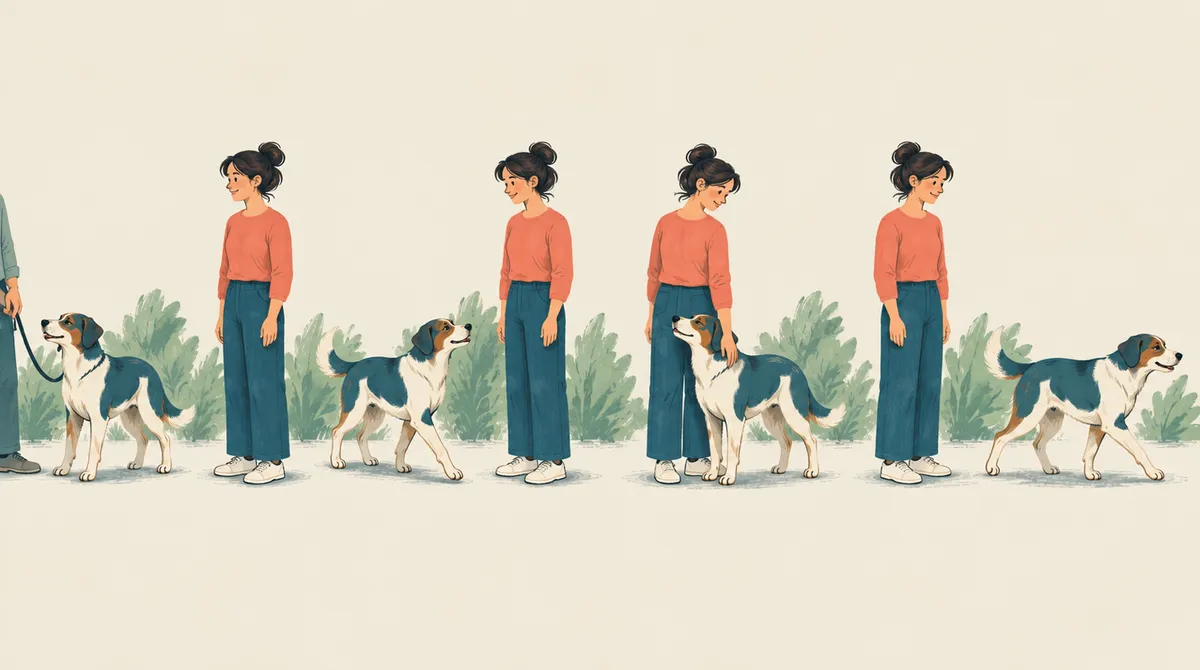
Why most trouble starts with a rushed greeting
Meeting a dog feels like a small thing — a hand out, a quick pat, a hello over the head. For the dog it is a stranger choosing contact with its body, often from above, sometimes without any way to say no. The AVMA's bite-prevention guidance (opens in a new tab) makes two points that reframe the whole encounter: any dog can bite in the right circumstances, and you cannot predict which dogs will bite from breed or size alone. "Looks friendly" is not a safety check.
The fix is not fear — it is sequence. A greeting the dog has agreed to is a different event from a greeting imposed on it, and almost everything in this guide is about securing that agreement before any touching happens. This is also a people-meeting-dogs guide: dogs greeting each other is its own skill, covered in the introductions guide.
Ask, then let the dog choose
The first step is not a hand — it is a question to the person on the other end of the lead. The AVMA's guidance starts there: get permission before you try to pet a dog. A "no" needs no reason offered — the dog may be in training, worried, elderly, recovering, working, or simply done with strangers today. Accept it and walk on.
If the answer is yes, the rest of the routine is about not crowding the decision:
Figure 1 · The greeting, in order
A polite hello, step by step
- Ask the ownerPermission is the door everything else passes through — a no ends it.
- Stand at an angle, unhurriedApproach slowly and calmly; side-on reads as less of a threat than a head-on lean.
- Keep your hands to yourselfNo reaching over the head, no looming — let a still, loose hand at your side be sniffed if the dog chooses.
- Let the dog close the gapIf the dog stays back or turns away, that is the answer — wait politely or move on.
- Stroke briefly, then pauseA short touch on the chest, shoulder or side; stop and see whether the dog stays for more.
Two details from that guidance deserve emphasis: eye contact and stillness. A soft, sideways gaze is friendlier to a dog than a fixed stare, and standing still while a dog sniffs you keeps you boring — boring is what you want. And when the dog decides it is done, allow it to leave; a dog that can always walk away is a dog that rarely needs to argue.
Where and how to stroke (and when to stop)
If the dog has come to you and stays close, aim low rather than high: chest, shoulder or the side of the neck are easier for a dog to watch and accept than a hand descending onto the top of the head. Keep it brief, then pause — the pause is a question. A dog that stays close, leans in or nudges back toward your hand is answering yes; a dog that moves off, turns its head away or simply stands still has said enough.
Skip the moves people mean kindly and dogs often don't: hugging, kissing, patting the top of the head, picking a small dog up, or crowding in for a selfie. These put a face or a body over or around a dog that cannot easily step back. The Dogs Trust's how-to-greet-a-dog poster (opens in a new tab) condenses the same routine into a printable visual for families and classrooms — ask, let the dog approach, keep contact low and brief.
Children and dogs: supervision rules that work
The AVMA is unambiguous on this: never leave a child alone with a dog — not "this dog wouldn't", not "just for a minute". Children are bitten more often than adults — the AVMA notes roughly half of dog-bite victims in the US are children — because children are smaller, closer to a dog's face, quicker and louder, and worse at reading the quiet signals.
Dogs Trust's child-safety guidance (opens in a new tab) turns supervision into something operational rather than vague. Its frame is three moves:
Figure 2 · The adult's job, in three parts
Stay close, step in, separate
- Stay closeNear enough to see and react the whole time — watching, not merely in the same room.
- Step inWhen either side is getting too excited, rough or worried, calmly end the interaction early.
- SeparateWhen you can't watch — cooking, a call, a nap — the dog and child are in different spaces.
Children can still learn the greeting — they just never run it alone. An adult asks the owner, an adult watches the dog's body language the whole time, and the adult ends the meeting early and cheerfully, while it is still going well. Dogs Trust also warns that dogs often signal discomfort quietly first — moving away, lip licking, yawning, blinking, leaning away, a tail going low — which is why the watching has to be active, not nearby-but-scrolling.
Give space when: eating, sleeping, hiding, on a lead
Some moments are a no without needing to ask. The AVMA's guidance names the two classic ones — never disturb a dog that is sleeping or eating — and the same logic covers a cluster of situations where a dog cannot easily choose to leave:
Figure 3 · No-approach moments
Walk past, don't fix
- Eating, chewing, sleeping or resting in a bed or den
- With puppies, or guarding a toy, bowl or spot
- Tied up, behind a fence or gate, or inside a car — no reaching in
- On a tight lead in a narrow space, where the option to step away is gone
- A dog that has already moved away, hidden, or gone still
- Unattended dogs generally — an ownerless dog is an unanswerable question
These aren't shyness problems to solve — they're situations where the dog can't say yes. The polite move is the walk-past.
The common thread is choice. A dog that is occupied, cornered, tethered or asleep has fewer ways to end an encounter politely, so a surprise touch arrives harder. Waiting for the dog to be free, awake and unbusy costs nothing.
Reading 'please stop' signals
Dogs rarely go from fine to bitten in one step — they usually ask quietly first. The problem is that the quiet requests are easy to miss if you're only watching the tail. Both PDSA's stress guidance (opens in a new tab) and Dogs Trust's child-safety advice list the same small signals:
Figure 4 · The quiet nos
Signals that end a greeting
And a growl deserves respect, not correction. It is the loud version of the same request — information about how the dog feels right now. Punishing a growl doesn't make a dog safer; it can teach the dog to skip the warning next time. The right response is to give space and let the moment end.
If a meeting goes wrong
If a dog stiffens, growls or snaps, slow everything down: stop moving toward it, avoid grabbing or shouting, and create distance calmly so the encounter can end. Running and screaming are harder to resist for a startled dog than a slow, boring retreat.
If someone is bitten, the AVMA's checklist (opens in a new tab) is the order: get the dog safely away and confined while you arrange help, clean the wound, and seek medical care — even small bites can be worth a doctor's look. Report the bite to local authorities where required — reporting rules differ by jurisdiction — and get the dog's vaccination status through its owner. Dogs Trust's advice adds the dog's side: after a bite, the dog needs a vet check (pain is a common driver) and then a qualified, accredited behaviourist — punishment after the fact teaches nothing the dog can use.
Most meetings won't come near any of this. The routine exists so the dog's answer is always allowed to be no — which is what makes the yeses safe.
Sources
- Dog bite prevention (opens in a new tab) — American Veterinary Medical Association: any dog can bite, breed alone doesn't predict it, ask permission, approach calmly, don't disturb eating or sleeping dogs, never leave children unsupervised, and what to do after a bite.
- Dogs and children: living happily together (opens in a new tab) — Dogs Trust: stay close, step in and separate; the quiet discomfort signals; vet and accredited behaviourist routes after incidents.
- How to greet a dog (poster) (opens in a new tab) — Dogs Trust: the ask-approach-brief-contact routine as a printable visual for families.
Sources last checked 2026-10-01.
Meeting your own dog's friends later? A photo can't preview whether a dog wants to be greeted — that decision stays with the dog, live. For bites or recurring aggressive incidents, people see a doctor and dogs see a vet followed by a qualified behaviourist.
Related reading
Polite greetings sit between reading body language and managing dog-to-dog introductions.
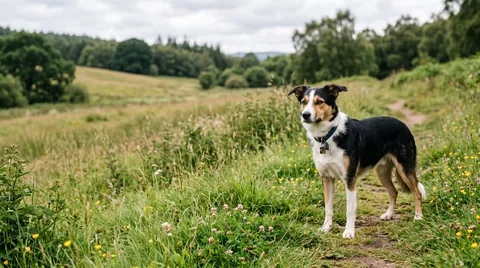 Read dog body language in contextThe full signal set — posture, face, tail and the situation around them.
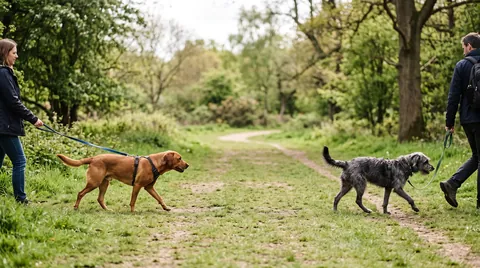 Introduce dogs at their paceDog-to-dog meetings are a different skill — space, neutrality, short sessions.
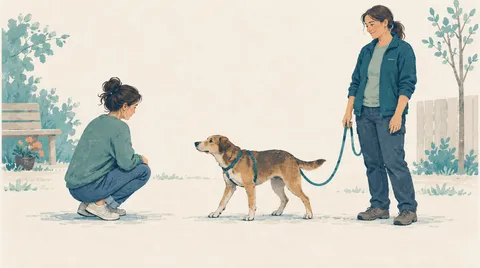 Meeting a dog before you adoptWhat a first meeting can and can't tell you, and what to ask.
Spotted an error? Tell us.