An everyday field guide
Meeting a dog before you adopt: what to look at and ask
You are about to make a friend based partly on a first impression — so make that impression an honest one. This guide is a calm checklist for the meeting itself: what a short visit can show, which questions to ask, and why a kennel-card breed label is a starting point rather than a fact.
A short meeting cannot reveal temperament or health. Shelter staff observations and a vet check outweigh any single visit — and any photo.
Published September 29, 2026 · Last updated September 29, 2026
What a first meeting can and cannot tell you
A first meeting happens on difficult ground: kennels are loud, unfamiliar, and stressful, and the dog you meet there is not necessarily the dog who will live in your home. Some dogs shut down under that stress and look calmer than they are; others ramp up and look wilder than they are. Treat the visit as one data point, not an audition the dog passes or fails.
The more reliable picture comes from the people who have watched the dog for weeks. Staff and foster carers see recovery after excitement, behaviour around food and handling, and the difference between a bad hour and a pattern. Welfare charities' guidance on choosing a pet (opens in a new tab) puts the same weight on honest preparation on your side: whether your place, time, exercise capacity, and budget match the animal you are considering.
Watching the dog in the kennel and in the yard
Watch before you touch. In the kennel run, notice how the dog reacts to people passing and how quickly they settle again. In a yard or meeting room, watch how they approach — or choose not to — and how they recover after a startle or a loud noise. Ask a staff member to handle the dog so you can see how the dog accepts touch on the collar, paws, and sides.
Look at the whole dog rather than one cue — a wagging tail or a lowered head means little on its own. Our guide to reading dog body language in context explains why one frame of behaviour never tells the whole story. And keep your own side of the meeting low-pressure: turn slightly sideways, keep your voice quiet, and let the dog close the distance.
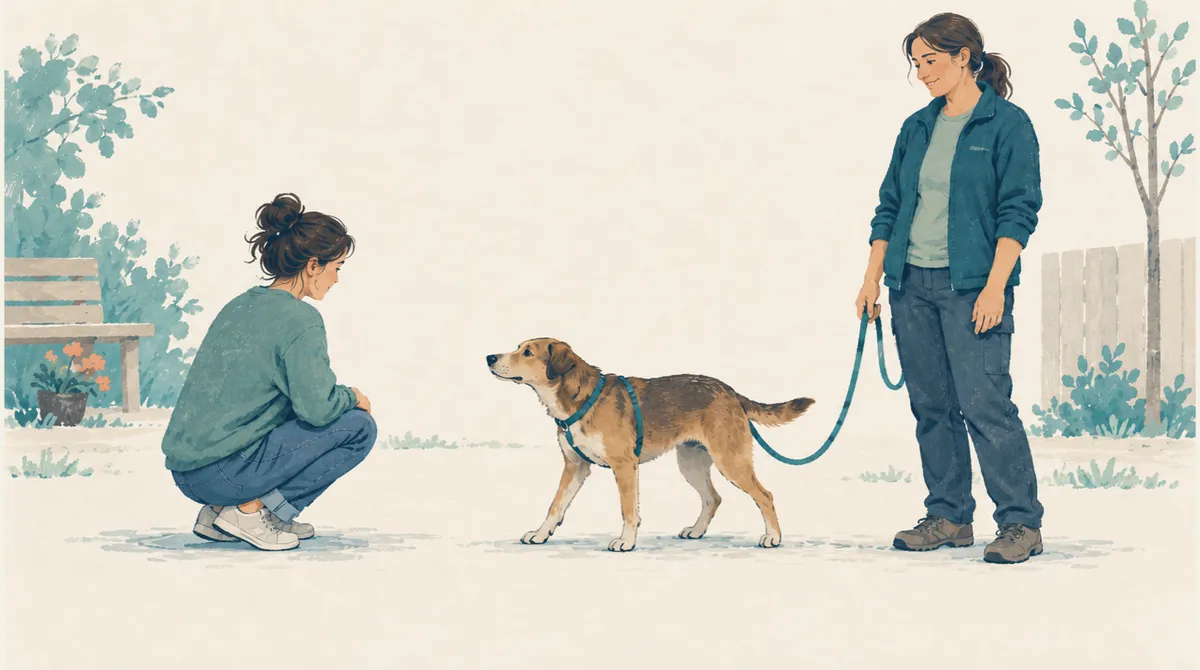
Figure 1 · A calm first meeting
Three steps that keep pressure low
- Watch from a distance firstSee how the dog behaves before they know you are interested.
- Let the dog approachCrouch or sit sideways and let a loose lead leave the choice to them.
- Watch recoveryHow the dog settles after interest or a startle tells you more than the first hello.
Questions worth asking the shelter or foster
The meeting is also an interview, and good shelters expect it. The point is to gather the observations you cannot make yourself in twenty minutes — history, routines, and the edges of what is known. Ask for the honest version, including what nobody knows yet.
Figure 2 · The questions checklist
Six questions to ask before you decide
Then turn the checklist inward. PDSA frames suitability around your place, the exercise you can offer, the time you genuinely have, and the ongoing spend — honest answers about your home matter as much as honest answers about the dog.
Meeting with children or other dogs
If children will share the home, ask how introductions should run and keep them quiet and brief — a dog meeting small humans for the first time in a strange place deserves an easy version of the encounter. If you already have a dog, many shelters arrange a controlled meeting, and welfare guidance on introducing dogs (opens in a new tab) describes the approach: calm, neutral ground, loose leads, and time. Our introductions guide covers the resident-dog meeting in detail.
What shelter breed labels mean — and don't
The name on the kennel card is usually a visual guess made at intake. The strongest evidence for treating it carefully is a PLOS One study of shelter dogs (opens in a new tab): when staff breed labels were compared with DNA results, genetics supported at least one labelled breed in 67.7% of dogs, but supported more than one labelled breed in only 10.4%. The label often caught one visible influence and missed the mix.
So read the label as a conversation starter, not a certificate — useful for asking “what have you seen that made you think that?”, useless for predicting the adult dog's size, energy, or temperament. Our guide to reading breed clues covers where those guesses run out of road.
Taking a photo home: what to notice later
If the shelter allows it, a photo is worth taking home — not for a verdict, but as a calm record. Away from the kennel noise you can look properly: the coat, the build, the ear set. A photo observation turns that picture into a list of visible traits you can discuss with the shelter or your vet on the next visit — traits, not temperament or ancestry.
And whatever the visit showed, plan for a vet check early after adoption: the people who examined the dog and the people who will care for them should be the same team.
A useful handoff: Watch the dog, ask the questions, hold the label loosely, and let staff observations and a vet outweigh any single impression — including a photo's.
Sources
- A canine identity crisis: genetic breed heritage testing of shelter dogs (opens in a new tab) — PLOS One (Gunter et al.), why kennel labels are starting points.
- PDSA: choosing a pet (opens in a new tab) — the honest questions to ask about place, exercise, time, and spend.
- PDSA: introducing dogs (opens in a new tab) — calm, managed meetings between dogs.
Sources last checked 2026-09-29.
Visiting a dog soon? If you take a photo, Dog Says Hi's photo observation can list the visible traits to talk through at your next visit — the photo is sent only after you explicitly submit it. For health concerns, contact a veterinarian.
Related reading
From the first meeting onward: reading behaviour, and introducing a resident dog.
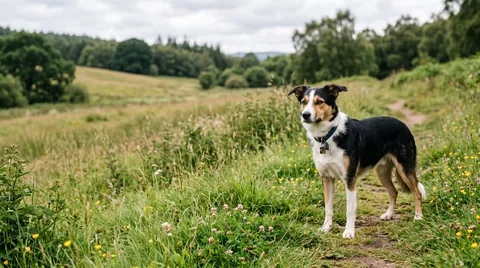 Read dog body language in contextNotice the whole dog before drawing a conclusion from one cue.
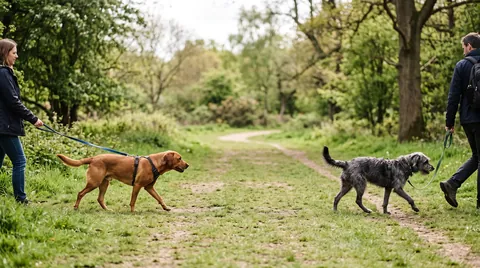 Introduce dogs at their paceWhen a resident dog is part of the decision.
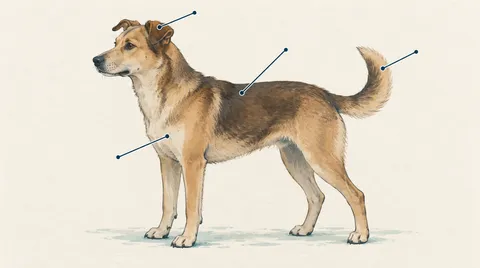 What breed might my dog be? Reading photo cluesHow far a breed label — or a photo — can really take you.
Spotted an error? Tell us.