An everyday field guide
Is it a puppy, an adult or a senior? Age clues in a photo
"About two, maybe three?" is the question every adopter asks — but a photo's honest answer is a stage, not a number. Visible features can suggest puppy, adult or senior, and even that broad band is a starting point for records and a vet, not a conclusion.
Dog Says Hi does not estimate age, and no photo confirms it — a rough guess should never drive medical, diet or breeding decisions. Sources are linked beside each claim.
Published October 1, 2026 · Last updated October 1, 2026
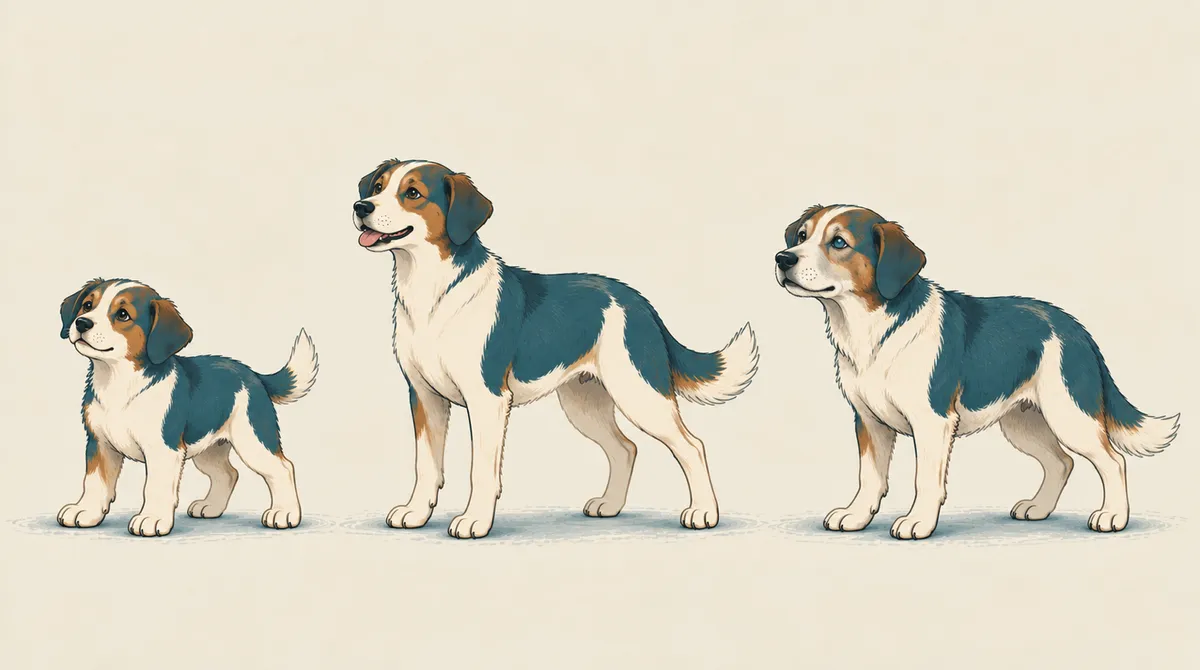
Why 'dog years' is the wrong question
Age in dogs doesn't run on one clock. The AKC's senior-dog explainer (opens in a new tab) dismantles the familiar "senior at seven" rule: no single age fits all dogs, and many vets prefer to think in terms of life expectancy — a dog counts as senior in roughly the final quarter of its expected lifespan. Because large breeds generally have shorter lifespans, a nine-year-old giant dog is typically much further along its timeline than a nine-year-old toy dog.
That's why the useful photo question isn't "how old" but "what stage". Stage is what the eyes can offer: proportions and softness point toward puppyhood, a settled body suggests the adult middle, and a cluster of small changes — muzzle, eyes, topline, movement — hints at the senior stretch. A photo gives you a band to sanity-check against records and a vet, and it's worth saying plainly: Dog Says Hi describes the visible traits in a photo; it does not estimate age, and neither should any single picture.
Puppy giveaways: proportions, paws, softness
Puppies are built in the wrong order, and it shows. Paws and heads look oversized for the body; legs look long and slightly disorganised; the whole outline reads unfinished rather than small. The AKC's age guide (opens in a new tab) adds a subtler tell: puppies carry soft, pinkish pads that walking and rough ground haven't hardened yet, while older dogs show darker, harder pads that may be dry or cracked.
Coat texture points the same way — puppy coats tend to look softer and fluffier than the adult coat that replaces them — and the mouth holds the one roughly datable landmark: the AKC notes dogs generally have their full set of adult teeth by about six months. The honest complication is that a small adult and a young large-breed puppy can look similar in a photo; proportions and pads say more than overall size. For what those early weeks are for, the socialisation guide covers the window.
Adult dogs: the age when photos stop telling
Between puppyhood and the senior stretch, the visible picture goes quiet. A healthy adult at three can look identical to the same dog at eight — the AKC describes the healthy adult dog as muscular, strong and lean, a state that holds for years in a well-kept dog. This is the band where a photo honestly cannot help much.
What doesn't date a dog: energy level alone (a calm adult reads "older" than a lively senior in a still photo), body condition (well-fed and under-exercised mimics age), and coat colour, which is set long before seniority. What the photo can still do in this stage is establish the baseline — the face, the topline, the eyes — against which later changes become visible. That's the version of age-watching a picture is actually good at.
Senior hints: grey muzzle, eyes, coat, movement
The senior clues arrive as a cluster rather than a switch. The AKC's age guide is direct about the most famous one — a grey muzzle is almost always the sign of a mature adult — while cautioning that, as in people, greying varies hugely. Some dogs frost early.
Figure 1 · What the camera can catch
Five visible hints of the senior stretch
When "senior" starts is equally elastic. The AKC's senior explainer puts small breeds' senior point somewhere between eight and twelve years, while giant breeds may be seniors at six or seven; many vets begin talking about senior screening around seven as a rule of thumb rather than a rule. Softer signs ride along — sleeping more, enthusiasm that fades sooner, senses that dim — and the AKC is blunt that dogs are experts at hiding discomfort, so a photo of a bright-eyed old dog tells you the dog looked bright-eyed in that moment, not that nothing hurts.
Why teeth estimates are a vet's job, not a photo's
Teeth genuinely do carry age information — that's why veterinarians use them. The AKC explains that vets read the whole pattern: adult teeth arriving by about six months, then accumulating staining, tartar and wear across the years. But wear is not a calendar. Diet, chew habits, dental disease and individual variation all move it, and a young dog with worn teeth or an older dog with clean ones are both common pictures.
There's also a safety reason to leave this out of photo-reading and out of your own inspection: prying open a strange dog's mouth to look at its teeth is a bite invitation. The estimate is better made by a vet with hands, light and history — and it only ever yields an approximation anyway.
What to do with a rough age estimate
A stage band earns its keep as a planning hint, not a fact. For an adopted dog, the shelter's records and the vet's exam outweigh any photo — the pre-adoption guide covers what to ask about history. At home, the band changes what good care looks like: puppy-shaped guesses point toward the early-weeks work; senior-shaped ones toward the adjustments in the senior-comfort guide and the gentler exercise pacing in PDSA's senior-exercise guidance (opens in a new tab).
If a closer estimate matters — for records, insurance, or planning — the route is records plus the vet, not the lens. The AKC notes that DNA-based age tests exist, which read markers such as telomere length; treat maker accuracy claims cautiously and discuss results with your vet like any other estimate.
Figure 2 · Taking the photo
The frame that shows the most
A useful handoff: A photo can suggest puppy, adult or senior — records and the vet turn that suggestion into something you can plan around.
Sources
- How to tell your dog's age (opens in a new tab) — American Kennel Club: grey muzzle, eye changes, pad and muscle clues, teeth as a veterinary method, and why estimates stay approximate.
- How do you know when your dog is a senior? (opens in a new tab) — American Kennel Club: why senior isn't one age, the lifespan-fraction framing, size differences, and the signs worth telling a vet.
- Cataracts vs. nuclear sclerosis (opens in a new tab) — American College of Veterinary Ophthalmologists: both conditions cloud the lens, telling them apart needs an ophthalmic exam, and concerns about cloudy eyes warrant evaluation.
- Exercising your senior dog (opens in a new tab) — PDSA: little-and-often exercise and gentler pacing once a dog is in the senior band.
Sources last checked 2026-10-01.
Curious what a photo does show? A Dog Says Hi photo observation lists the visible traits — coat, build, posture — and deliberately does not guess age, health or temperament. The photo is sent only after you explicitly submit it, and the AI-generated reading is provisional and can be wrong or incomplete. For anything an age estimate would drive — diet, medication, exercise limits — contact a veterinarian.
Related reading
Age is one interpretation limit — breed is the other, and the senior stage has its own guide.
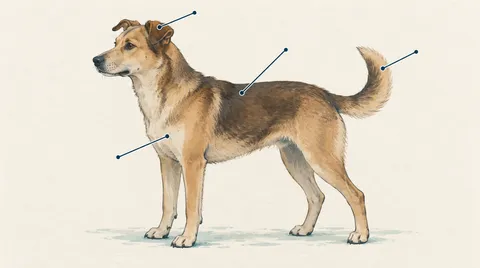 What breed might my dog be?The sibling question — what a photo can and can't say about ancestry.
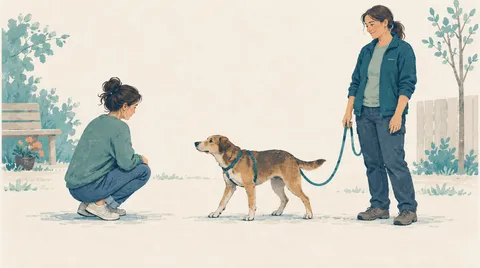 Meeting a dog before you adoptRecords and questions that outweigh any photo guess.
- Everyday comfort for a senior dogWhat to adjust if the clues do point to the senior stretch.
Spotted an error? Tell us.