An everyday field guide
Photo guesses vs DNA tests: what each can and can't tell you
After a photo lookup comes the obvious next question: is this enough, or should I buy a DNA test? The honest answer starts by noticing the two methods answer different questions — one describes what is visible, the other estimates genetic resemblance — and neither produces a certificate.
Neither method confirms breed, health, or temperament. DNA results are estimates, and health-related findings belong with a veterinarian.
Published September 29, 2026 · Last updated September 29, 2026
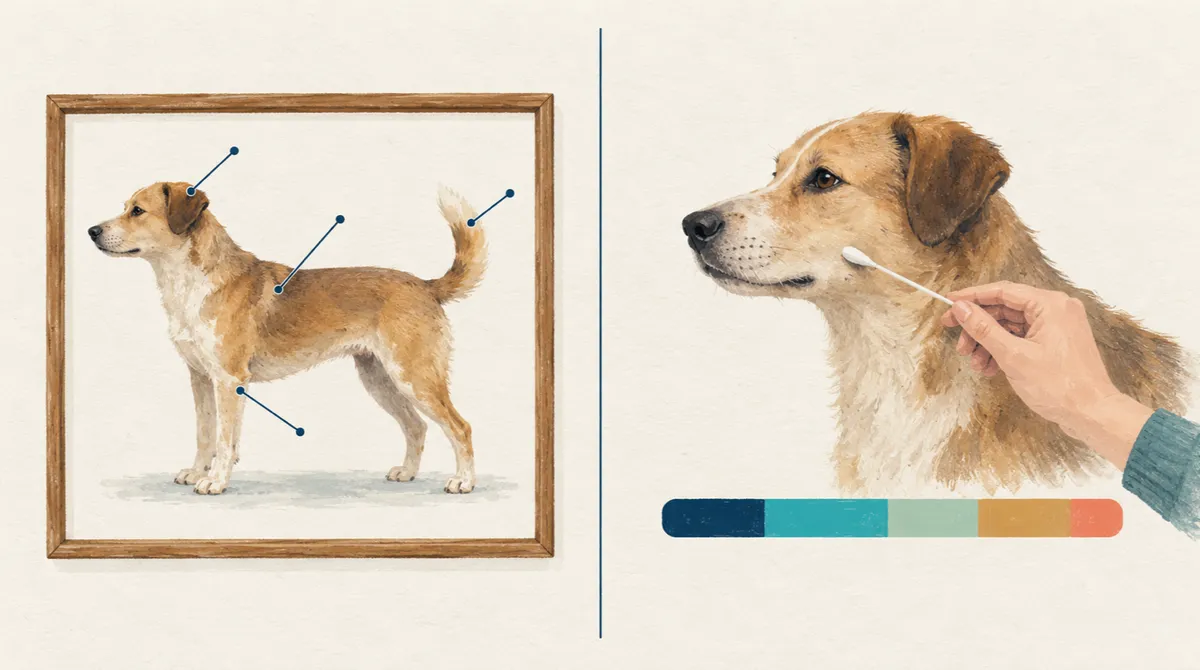
The question each method actually answers
A photo lookup answers “what does this dog look like?” — and, carefully, “which lineages might those visible traits hint at?” A breed DNA test answers a different question: “which reference populations does this dog's genome most resemble?” One describes appearance; the other estimates ancestry. Frustration with either usually comes from expecting it to answer the other's question.
Figure 1 · Two different questions
What each method is actually measuring
What a photo can show: visible traits, not ancestry
A photo carries real information — coat length and pattern, ear set, tail carriage, build, the silhouette in profile. Those are the honest building blocks of any breed conversation, and they are what a good photo tool reports first. Our guide to reading photo clues walks through which features carry weight.
What a photo cannot do is look under the appearance. Two dogs with different ancestry can photograph almost identically, and grooming, age, or a flattering angle can hide the most diagnostic feature. A photo's breed idea is a resemblance — useful, honest about its limits, and free to get.
What a DNA test estimates — and its own limits
A consumer breed test compares genetic markers from a cheek swab against a reference panel and returns estimated percentages. Two limits matter. First, the answer is only as good as the panel: results depend on each company's reference panel, so the same dog can get different breakdowns. Second, an estimate is not a certificate — percentages describe resemblance to a panel, not a documented pedigree.
It is also worth knowing what genetics laboratories actually sell. The UC Davis Veterinary Genetics Laboratory's dog test list (opens in a new tab) covers parentage verification, genetic diversity, and inherited trait and health markers — and its FAQ states plainly that it does not offer a breed identification test (opens in a new tab). Breed guesses sit with consumer ancestry products, which estimate rather than verify. And any health-related finding — from any test — belongs with a veterinarian, not with a results page.
What research found when shelters' labels met DNA
The most useful reality check comes from a PLOS One study (opens in a new tab) that compared shelter staff's visual breed labels with DNA results. The genetic data supported at least one labelled breed in 67.7% of dogs — a real signal — but supported more than one labelled breed in only 10.4%. Visual identification often caught part of a dog's ancestry and usually missed the mixture.
Figure 2 · What the study measured
Visual labels vs genetic testing in shelter dogs
Read it fairly, in both directions: the photo methods missed depth, but the DNA comparison is itself an estimate against a reference panel, not ground truth handed down. The study shows why certainty about a mix is hard to come by from either direction.
When a photo lookup is enough
For most everyday purposes, the photo wins on usefulness per pound spent — it is free, instant, and honest about what it sees. Describing your dog to a groomer, sitter, or vet; wondering which traits the camera caught; deciding which brushing routine or enrichment game to try first: none of these need percentages. A list of observed traits is more actionable than a pie chart of ancestry for the daily questions.
When a DNA test might add something
If the ancestry question itself keeps nagging — you genuinely want the genetic estimate, not just the visible description — a consumer breed test is the tool built for it. Some owners also want the health-marker screening that some panels include; treat those findings as a prompt for a vet conversation, not a verdict. And if parentage is what you actually need to establish — for example with a breeder's claim — laboratories offer proper parentage testing rather than breed guessing, as the VGL test list (opens in a new tab) shows.
Go in with calibrated expectations: you will get an estimate with margins, not a certificate, and your dog will be the same dog the day after the results arrive.
Neither replaces noticing the dog in front of you
Whichever method you start with, the care questions — exercise, grooming, enrichment, comfort — still get answered by watching the individual dog. A photo reading and a DNA estimate are both sketches of ancestry; the dog's own energy, coat, and behaviour are the document that matters. For anything health-related, the route is a veterinarian either way.
A useful handoff: Start with the free photo reading. If the ancestry question still itches after you know what the photo shows, a DNA estimate is the tool for that specific question — with its own margins of uncertainty.
Sources
- A canine identity crisis: genetic breed heritage testing of shelter dogs (opens in a new tab) — PLOS One (Gunter et al.), visual labels vs DNA comparison.
- UC Davis VGL FAQ (opens in a new tab) — states that the laboratory does not offer a breed identification test.
- UC Davis VGL dog tests and pricing (opens in a new tab) — what a veterinary genetics lab does test: parentage, diversity, trait and health markers.
Sources last checked 2026-09-29.
Before paying for a test, see what the photo shows. Try Dog Says Hi's photo observation — the photo is sent only after you explicitly submit it — and decide whether the ancestry question still needs a swab. For health concerns, contact a veterinarian.
Related reading
Get the most from the photo first — then decide what the breed question still needs.
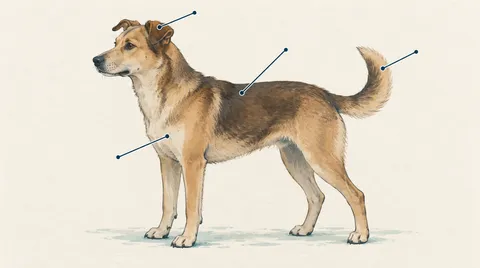 What breed might my dog be? Reading photo cluesWhich visible features hint at ancestry — and where guessing ends.
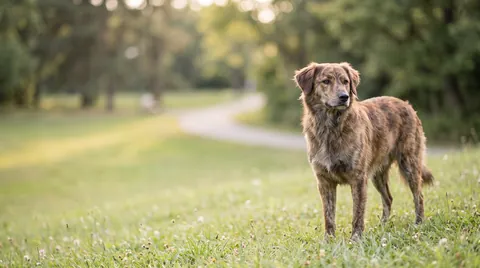 Take a dog photo that shows visible traitsCapture the features a lookup can actually read.
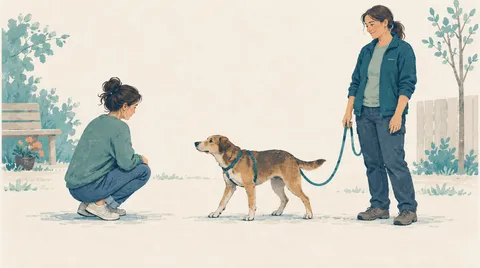 Meeting a dog before you adoptWhat to watch and ask — and why shelter breed labels are starting points.
Spotted an error? Tell us.